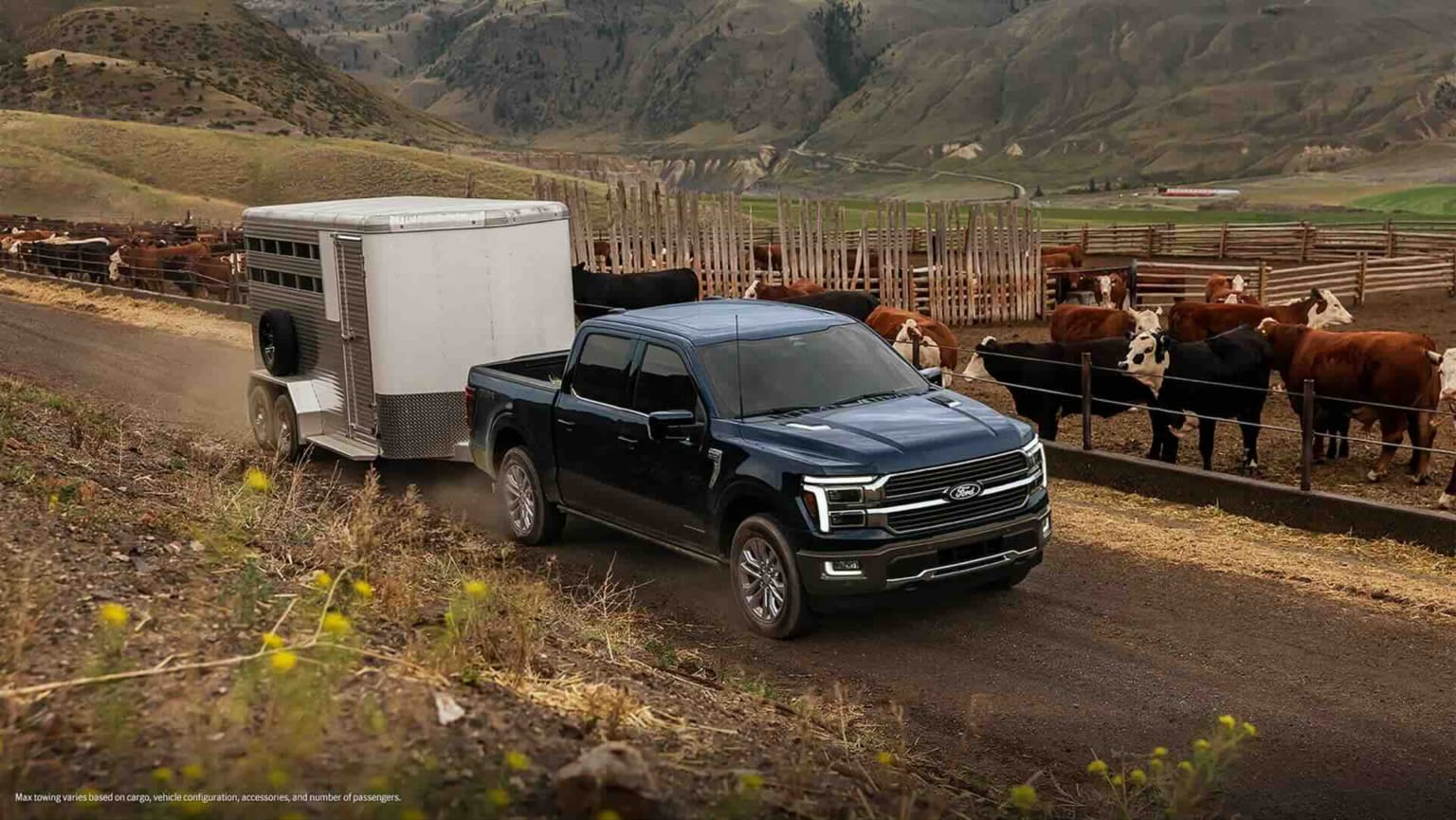
How Much Does a Ford F-150 Weigh?
Curb Weight, Gross Weight, and Payload Explained
The Truck Number Most Shoppers Forget
How much does a Ford F-150 weigh? It sounds like a simple question, but with America’s favorite pickup, the answer depends on the truck in front of you.
Cab size, bed length, engine, drivetrain, trim, packages, towing equipment, wheels, off-road hardware, hybrid components, and added accessories can all change Ford F-150 weight. That’s why two F-150 trucks parked side by side can have different curb weights, payload ratings, GVWR numbers, and towing behavior.
At J.C. Lewis Ford Hinesville, we help drivers compare the numbers that matter before they buy. Whether you’re using your truck for work near Fort Stewart, towing on the weekend, hauling supplies around Liberty County, or driving daily across coastal Georgia, understanding F-150 payload, curb weight, and GVWR helps answer how much a Ford F-150 weighs in a way that actually matters.
How Much Does a Ford F-150 Weigh?
So, how much does a Ford F-150 weigh? Many current F-150 curb weights fall somewhere in the mid-4,000-pound to upper-5,000-pound range depending on configuration. Ford’s 2026 F-150 specs list examples such as a 2.7L EcoBoost® 4x2 base curb weight of 4,687 pounds, a 2.7L EcoBoost 4x4 at 4,941 pounds, and Raptor models that can climb higher, including a listed Raptor R base curb weight of 5,950 pounds.
That’s the honest answer: how much a Ford F-150 weighs depends on the specific build. A lighter Regular Cab work truck will not weigh the same as a SuperCrew® 4x4 with premium features, hybrid equipment, off-road hardware, or towing packages.
For shoppers, the important thing is not memorizing one Ford F-150 weight number. It’s knowing where to find the exact number for the truck you’re considering.
Why F-150 Weight Isn’t One Simple Number
The answer to how much a Ford F-150 weighs changes because the F-150 is not one truck. It’s a whole lineup of trucks. It’s a whole lineup of trucks.
A Regular Cab with a long bed is built for different work than a SuperCrew family truck. A 4x2 weighs differently than a 4x4. A hybrid powertrain changes the math. A Raptor brings performance hardware that adds weight. Even tires, wheels, trim features, and packages can affect the final number.
Cab Size
Regular Cab models are generally lighter and work-focused. SuperCab and SuperCrew models add passenger space, which usually adds weight.
Bed Length
A longer bed can add weight, but it can also add cargo flexibility. Match the bed to what you actually haul.
Engine and Drivetrain
Engine choice, hybrid equipment, 4x4 hardware, and off-road parts can change Ford F-150 weight.
Options and Packages
Tow equipment, skid plates, larger wheels, luxury features, bed accessories, and aftermarket gear all matter.
Curb Weight vs. GVWR vs. Payload
When shoppers ask how much does a Ford F-150 weigh, they’re usually talking about curb weight. But curb weight is only one part of the story.

Curb weight is the truck’s weight before you add people, cargo, tools, accessories, or trailer tongue weight. Think of it as the truck’s starting point.
A lighter F-150 curb weight may help preserve more room for payload. A heavier truck may include more cabin space, more equipment, 4x4 hardware, hybrid components, luxury features, or off-road upgrades.
How Cab and Bed Size Affect Weight
Cab and bed choices are some of the biggest reasons Ford F-150 weight varies. A Regular Cab is usually the simplest, most work-focused body style, while SuperCab adds rear-seat flexibility and SuperCrew gives you the most passenger room. Bed length matters, too. A shorter bed can be easier to park and maneuver, while a longer bed can be better for tools, lumber, gear, coolers, jobsite supplies, and bulky cargo.
If you’re asking how much a Ford F-150 weighs, start with cab and bed first. Those choices shape the truck before you even pick an engine.
Regular Cab
Best if you want simple work-truck utility and don’t need much rear-seat space.
SuperCab
A useful middle ground for occasional passengers, tools, bags, and flexible storage.
SuperCrew
The everyday favorite for families, crews, and drivers who want more cabin space.
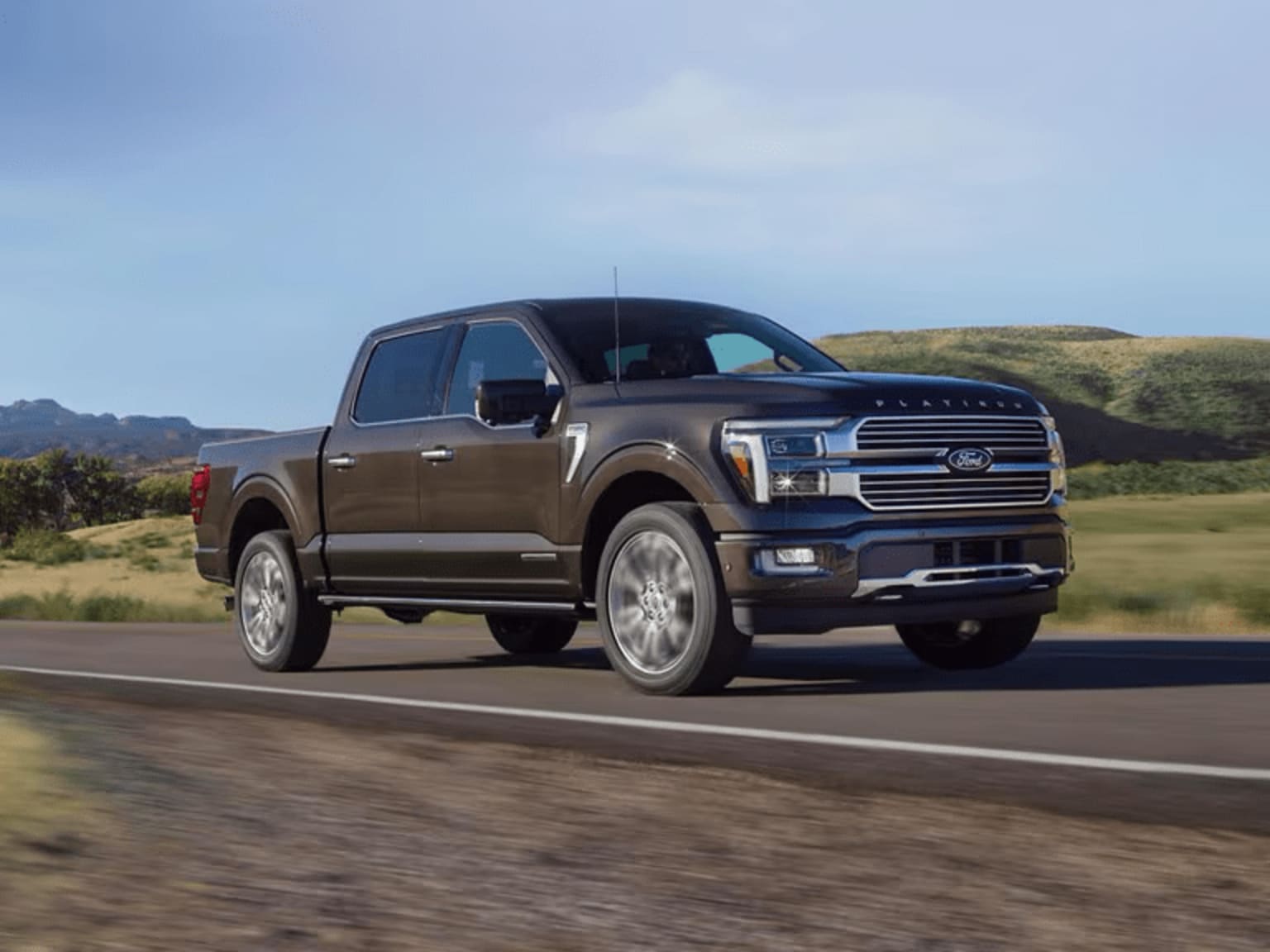
How Engine and Drivetrain Affect Weight
Engine choice is another reason the answer changes when shoppers ask how much a Ford F-150 weighs. It affects performance, towing, payload, and how the truck feels when loaded.
For the 2026 F-150, Ford lists engines including the 2.7L EcoBoost V6, 5.0L V8, 3.5L EcoBoost V6, 3.5L PowerBoost Hybrid V6, High-Output 3.5L EcoBoost V6, and supercharged 5.2L V8 in Raptor R.
Ford lists the F-150 with up to 13,500 pounds of available towing and up to 2,440 pounds of maximum available payload when properly equipped. Ratings vary by engine, cab, bed, drivetrain, axle ratio, and equipment.
Drivetrain matters, too. A 4x4 system can add weight compared with 4x2, but it may be worth it for muddy roads, job sites, boat ramps, hunting property, or rough weather.
When comparing F-150 payload, look at the full build: cab, bed, drivetrain, axle ratio, packages, wheels, and equipment.
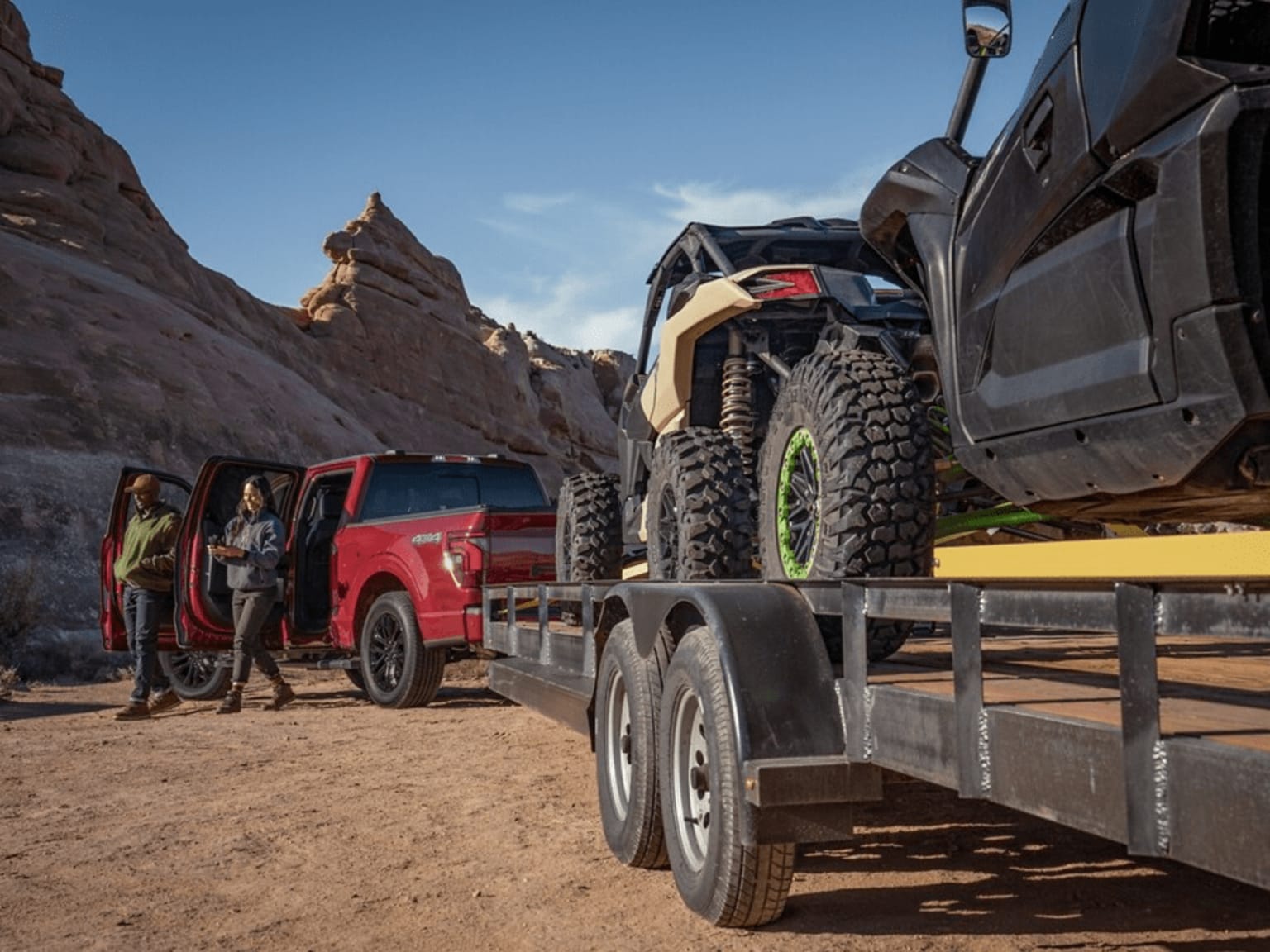
Why F-150 Weight Matters for Towing and Hauling
Accurately knowing how much your Ford F-150 weighs matters because towing is not just about the trailer. It’s about the entire loaded setup.
When you tow, trailer tongue weight counts against F-150 payload. Add passengers, luggage, tools, coolers, hitch equipment, bed cargo, and accessories, and the available payload can disappear faster than expected. Ford’s towing guidance explains that GVWR is the maximum weight the vehicle itself can safely carry, while towing capacity is the weight the vehicle can pull behind it.
That’s why Ford F-150 weight is more than a spec-sheet detail. A truck with a higher curb weight, more passengers, or more installed equipment may have less payload room left for cargo and trailer tongue weight.
Check the Doorjamb Label: This tells you the truck-specific carrying capacity and GVWR.
Count People and Cargo: Passengers, tools, equipment, and bed cargo all use payload.
Add Trailer Tongue Weight: Your trailer does not only pull behind the truck. It also presses weight onto the hitch.
If you tow often, don’t stop at “how much does a Ford F-150 weigh?” Ask how much payload remains when the truck is loaded the way you actually use it.
How to Choose the Right F-150 Setup 🧠
The right F-150 depends on your work, family, trailer, and everyday driving. There is no one perfect Ford F-150 weight for everyone.
Before you ask “how much does a Ford F-150 weigh,” ask how you’ll use it. Choose a lighter, simpler setup if you want easier daily driving, a practical work truck, and more focus on useful payload. Choose a larger cab or 4x4 setup if passengers, traction, comfort, or off-road confidence matter more.
Choose More Payload Focus If…
You carry tools, materials, equipment, feed, supplies, coolers, or trailer tongue weight often. A stronger F-150 payload setup should be part of the shopping process from the start.
Choose More Comfort Focus If…
You use your F-150 as a family vehicle, road-trip truck, or daily driver. A SuperCrew with more features may be worth the extra weight.
Choose More Tow Focus If…
You pull campers, boats, utility trailers, or work trailers. Confirm towing capacity, payload, GCWR, hitch rating, and the truck’s exact label before you buy.
So, how much does a Ford F-150 weigh for the right setup? The answer should match your life. The right truck is not always the lightest or the heaviest. It’s the one that gives you the right balance of cab space, bed utility, towing confidence, and F-150 payload.
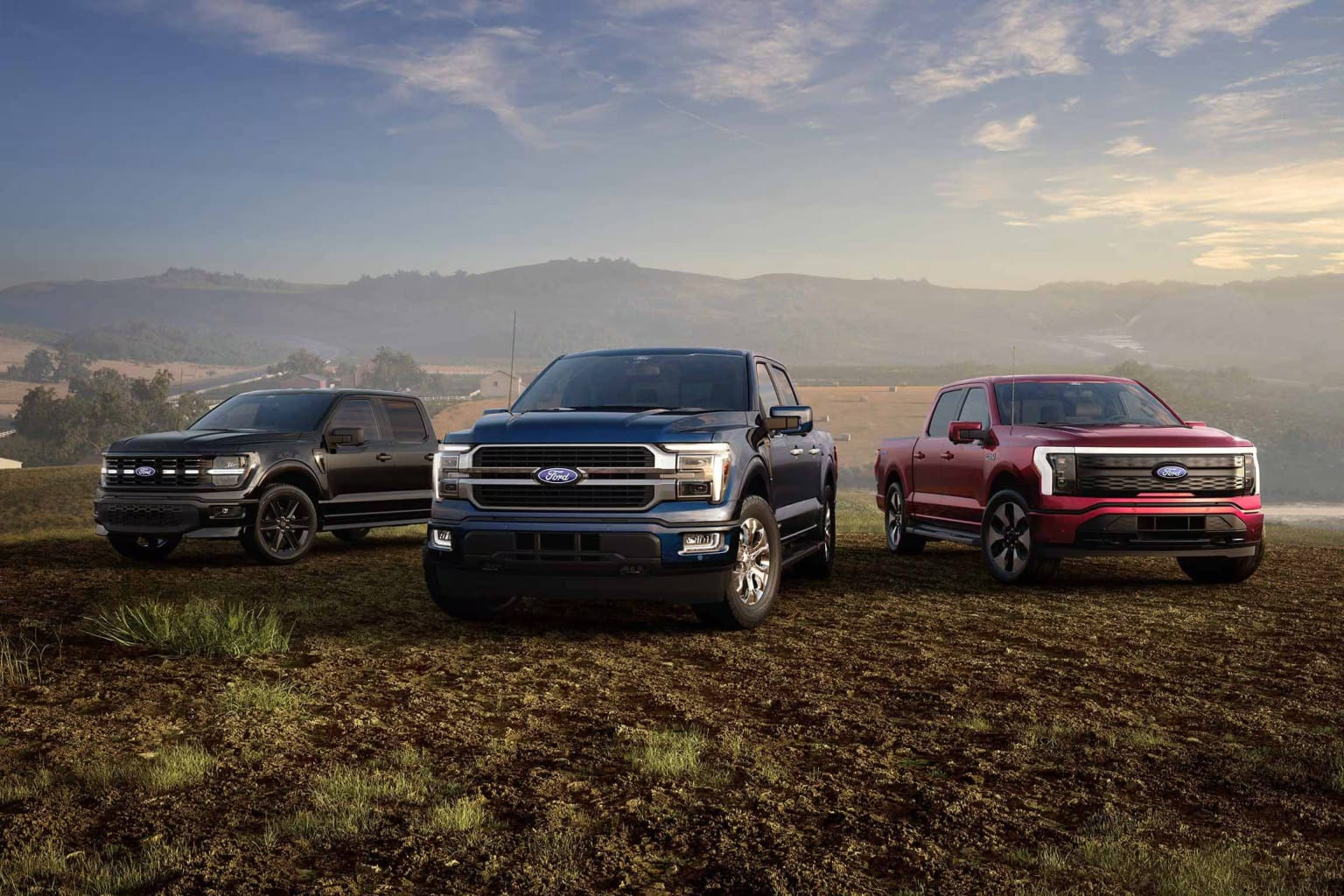
Shop Ford F-150 at J.C. Lewis Ford Hinesville
Still asking how much a Ford F-150 weighs for the exact truck build you want? We can help you get specific.
At J.C. Lewis Ford Hinesville, our team can help you compare F-150 curb weight, GVWR, towing ratings, engine options, cab sizes, bed lengths, and packages before you choose. Bring us your trailer, jobsite needs, passenger count, and hauling plans. We’ll help you find an F-150 that fits the way you actually drive.
Ford F-150 Weight FAQs
Have questions about Ford F-150 weight, F-150 payload, and F-150 curb weight? These quick answers will help you understand the numbers before you buy.