
Ford Explorer vs. Chevrolet Traverse:
Two Family SUVs, One Big Decision
Three rows, turbocharged power, available hands-free driving, and enough room for a week’s worth of family gear make these two SUVs natural rivals. But the Ford Explorer vs Chevy Traverse comparison gets more interesting once you look past the basic “three-row SUV” label.
For 2027, the Explorer offers two engine choices, rear-wheel drive or available 4WD on several trims, an off-road-ready Tremor®, and an ST with up to 400 horsepower. The Traverse counters with more maximum cargo space, seating for up to eight, a large standard 17.7-inch touchscreen, and its own Z71 off-road model.
At J.C. Lewis Ford Hinesville, we think the useful question isn’t which badge looks better in the driveway. It’s what matters more in Explorer vs Traverse: extra space, stronger available performance, or the everyday practicality your family actually uses.
Explorer vs Traverse at a Glance
Here’s the quick version of the Ford Explorer vs Chevrolet Traverse specs for the 2027 models.
Specification | 2027 Ford Explorer | 2027 Chevrolet Traverse |
|---|---|---|
Standard engine | 2.3L EcoBoost® I-4 | 2.5L turbo I-4 |
Standard horsepower | 300 hp | 328 hp |
Available max horsepower | 400 hp | 328 hp |
Max seating | 7 | 8 |
Max cargo volume | Up to 85.8 cu. ft. | Up to 98 cu. ft. |
Max towing | 5,000 lbs. | 5,000 lbs. |
Overall length | 198.7 in. | 204.4 in.; 204.7 in. Z71 |
Off-road trim | Tremor | Z71 |
Hands-free driving | Available BlueCruise | Available Super Cruise |
Center display | 13.2 in. | 17.7 in. |
Exact specifications vary by trim and configuration.
The table makes the Ford Explorer vs Chevy Traverse differences pretty clear: Traverse emphasizes passenger and cargo room, while Explorer offers a broader performance range and a shorter overall footprint.
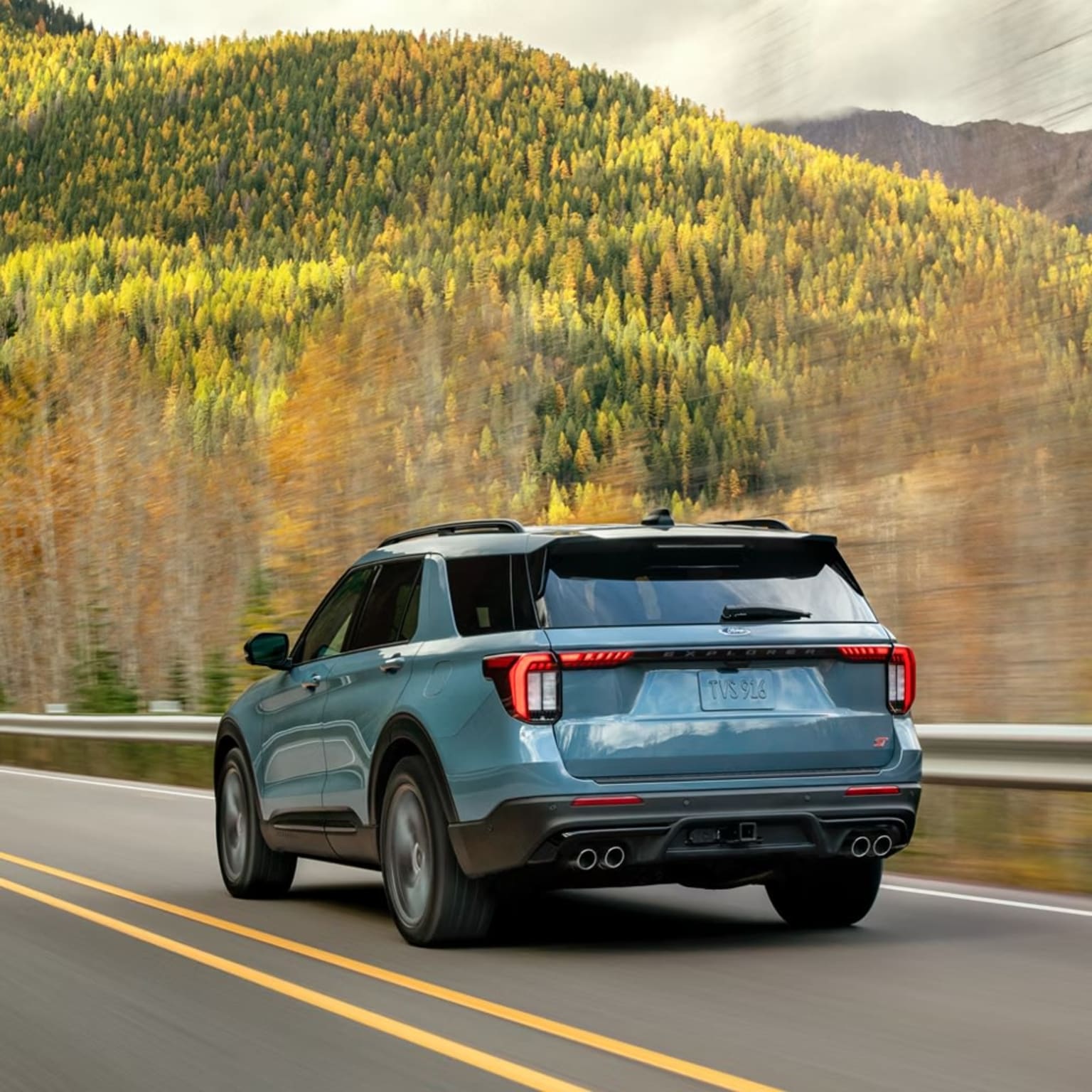
Power Is Where the Explorer Changes the Conversation
One turbo engine or two very different levels of performance?
The standard Explorer uses a 2.3L EcoBoost four-cylinder with 300 horsepower and 310 lb-ft of torque, standard on Active, ST-Line, Tremor, and Platinum.
The Ford Explorer vs Chevy Traverse power comparison changes once Explorer’s available 3.0L twin-turbo EcoBoost V6 enters the picture. Available on Tremor and Platinum and standard on ST, it produces up to 400 horsepower and 415 lb-ft of torque.
Traverse keeps things simpler with one turbocharged 2.5L four-cylinder across the lineup, making 328 horsepower and 326 lb-ft of torque.
For shoppers comparing Explorer vs Traverse, Traverse has the stronger standard engine, while Explorer offers a much higher performance ceiling with its available V6.
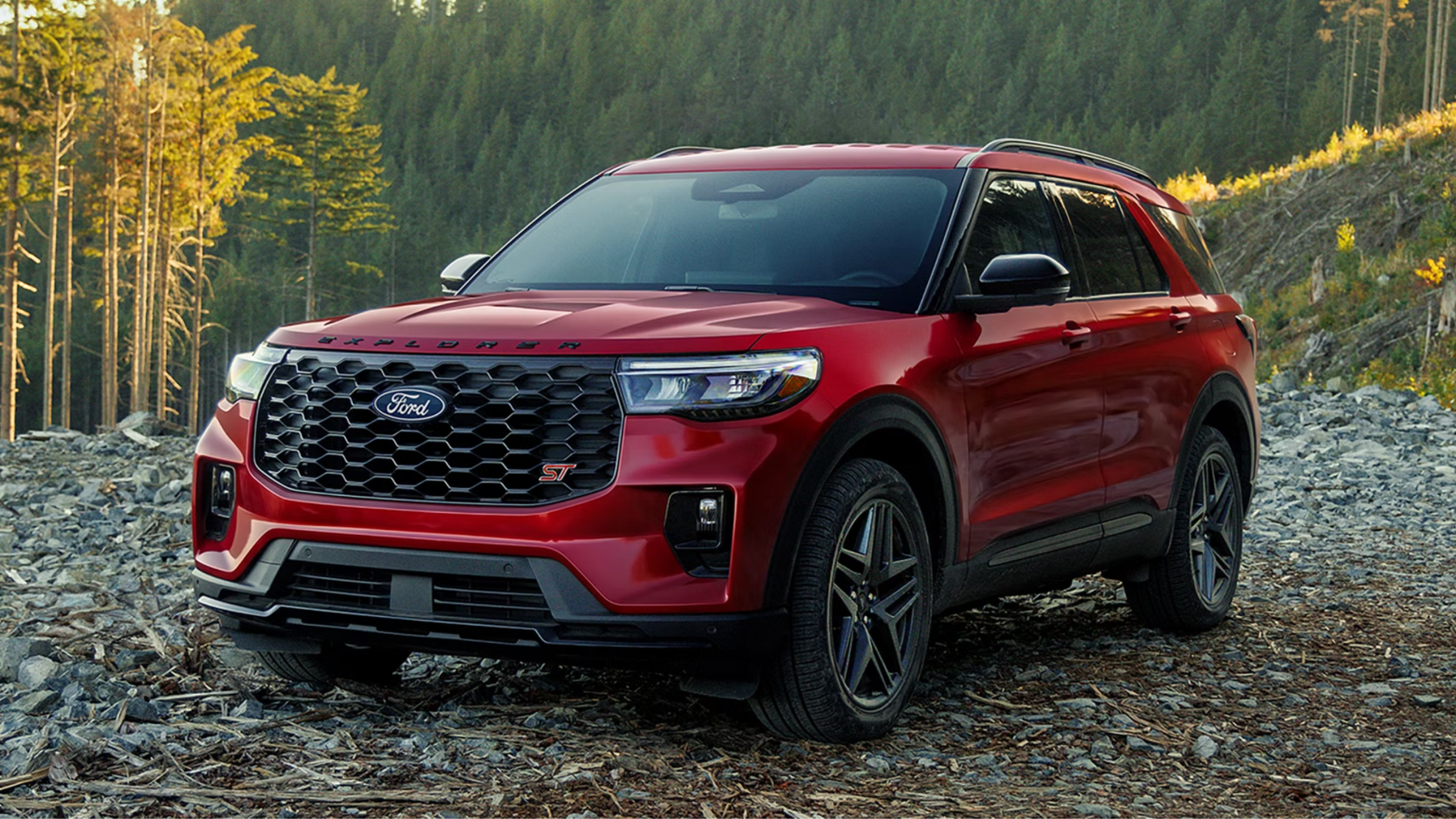
Rear-Wheel Drive Gives Explorer a Different Foundation
Power isn’t the only mechanical difference.
Active, ST-Line, Platinum, and ST Explorer models use rear-wheel drive as their standard layout, with Intelligent 4WD available. Tremor comes standard with 4WD.
Chevrolet offers available AWD on Traverse, while Z71 gets an Advanced Twin-Clutch AWD system designed for its more off-road-focused role.
For shoppers researching Ford Explorer vs Chevy Traverse, that gives Explorer a distinct layout within the segment. Rear-wheel drive remains available for drivers who want it, while several 4WD configurations cover weather, travel, and rougher terrain.
Traverse Takes the Lead on Interior Volume 🏆
If space is the priority, Traverse makes its case.
In the Ford Explorer vs Chevy Traverse comparison, Traverse offers up to 98 cubic feet of cargo space and seating for up to eight. Explorer offers up to 85.8 cubic feet and seats six or seven, depending on configuration.
The Ford Explorer vs Chevrolet Traverse specs favor Traverse for maximum room, especially if you regularly use the third row or need space for a larger family. Explorer counters with a shorter 198.7-inch footprint. That’s about 5.7 inches shorter than the standard Traverse, which can make the Explorer vs Traverse decision easier for tighter garages, crowded parking lots, and everyday maneuverability.
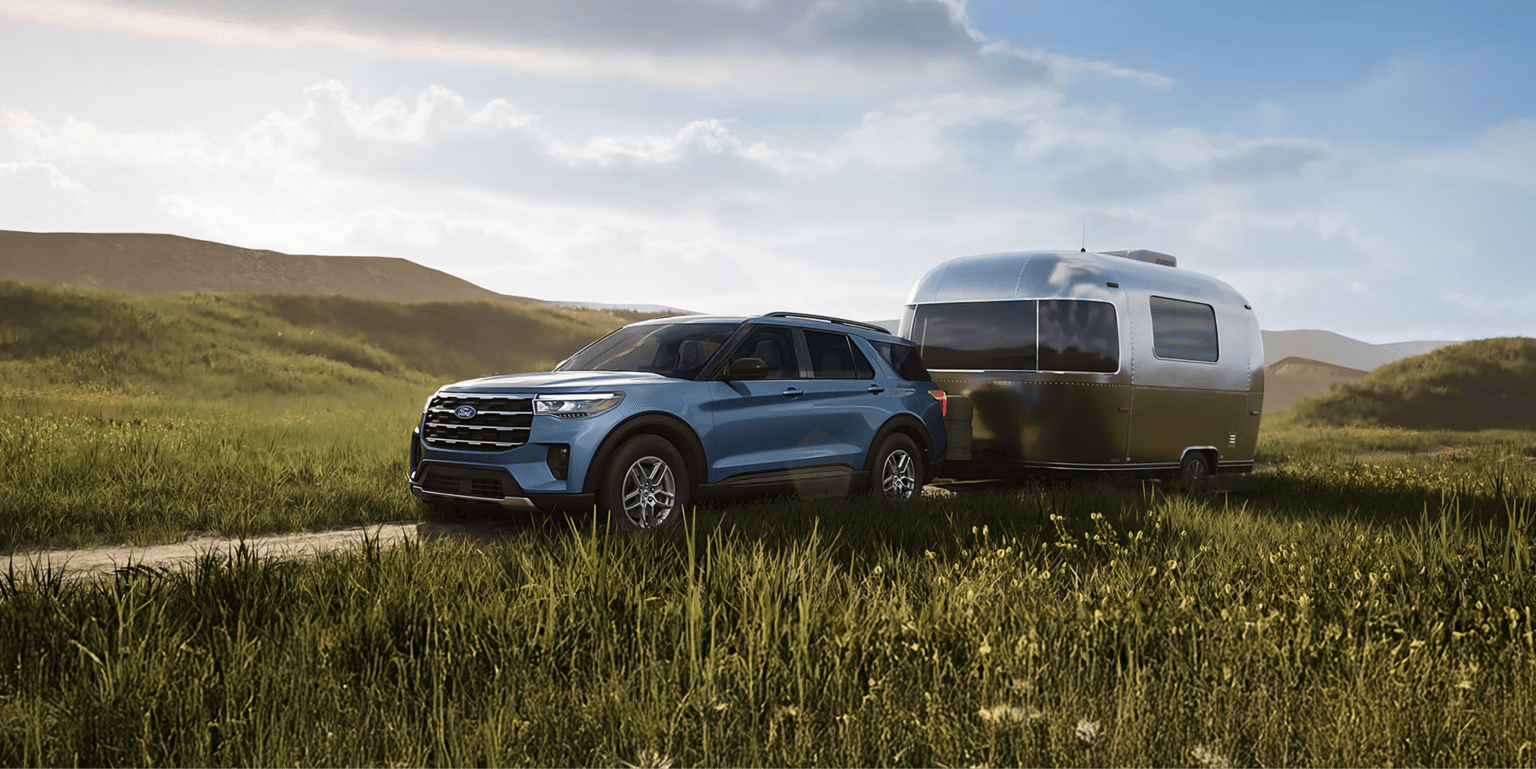
Same 5,000-Pound Number, Different Approaches
Neither SUV forces you to give up towing just because there are three rows behind the driver.
Every 2027 Explorer has a maximum tow rating of up to 5,000 pounds when properly equipped.
The Traverse also reaches 5,000 pounds, with Chevrolet including trailering equipment and features such as Hitch View, Hitch Guidance, and a Trailering App on applicable models.
That makes towing one of the closest parts of the Ford Explorer vs Chevy Traverse matchup. Either SUV can cover many small campers, boats, utility trailers, and recreational setups when properly configured.
Always verify the exact vehicle, trailer weight, hitch setup, passengers, and cargo before towing.
Tremor vs Z71: When the Family Trip Leaves the Pavement
Both brands give their three-row SUVs real off-road hardware, making this one of the more interesting parts of Ford Explorer vs Chevy Traverse.
Ford Explorer Tremor®
Explorer Tremor comes standard with Intelligent 4WD, all-terrain tires, a Torsen® limited-slip rear axle, underbody protection, off-road-tuned suspension, selectable Off-Road mode, and 8.7 inches of ground clearance. It can also be equipped with Explorer’s available 3.0L EcoBoost V6 for substantially more power.
Chevrolet Traverse Z71
Traverse Z71 includes Advanced Twin-Clutch AWD, all-terrain tires, an off-road suspension, skid plate, Terrain Mode, and Hill Descent Control. It uses Traverse’s 328-hp 2.5L turbo engine, giving Z71 real trail-focused hardware while keeping the same powertrain used across the Traverse lineup.
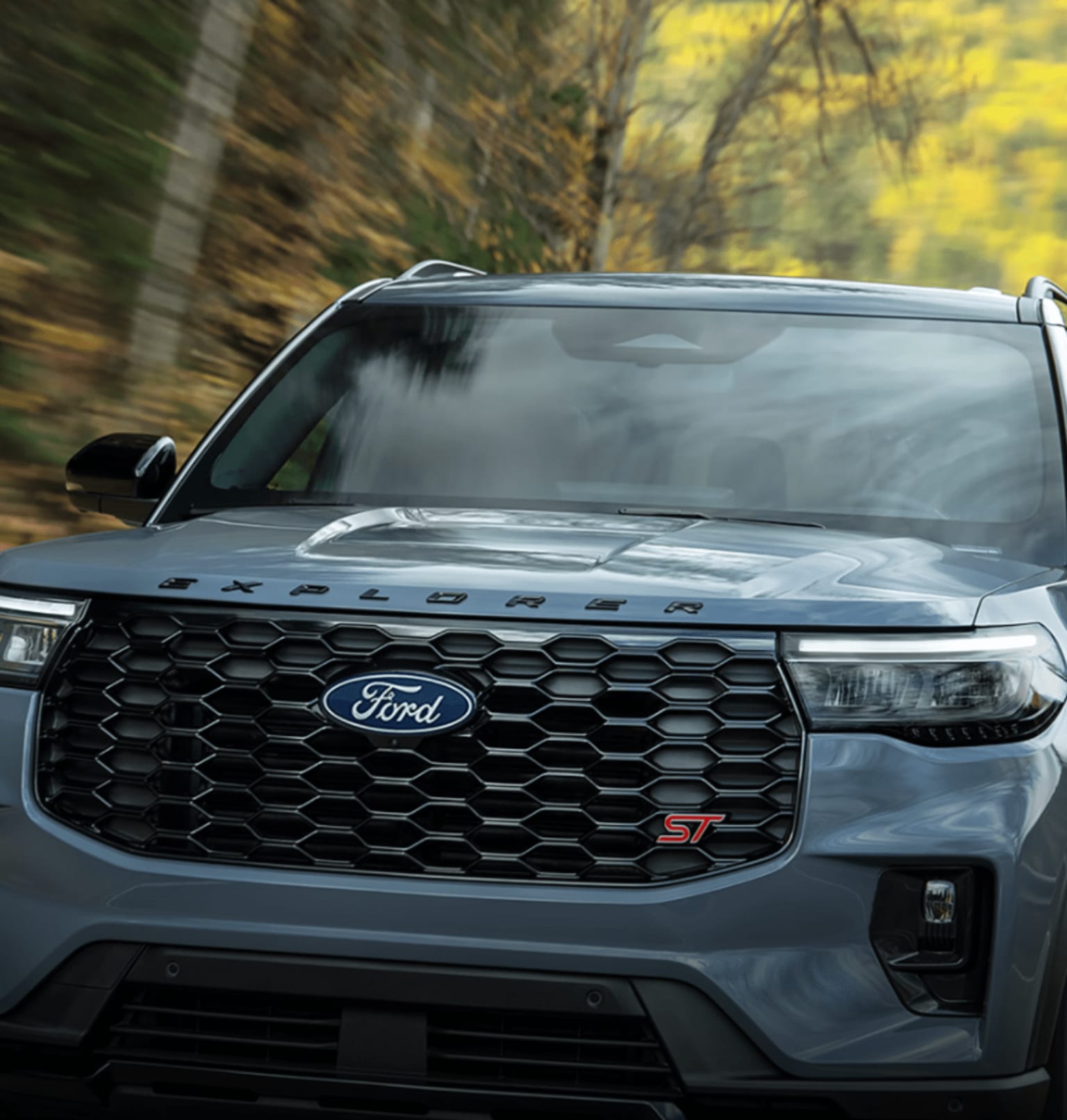
ST Gives Explorer a Performance Lane of Its Own
Not every family SUV needs to pretend horsepower doesn’t matter.
When considering Ford Explorer vs Chevy Traverse for performance, Explorer ST takes the more performance-focused approach. Its 3.0L twin-turbo EcoBoost V6 produces up to 400 horsepower and 415 lb-ft of torque, paired with a sport-tuned suspension, performance brakes, 21-inch wheels, and quad exhaust outlets.
Traverse RS looks the part with 22-inch black wheels, blackout exterior details, RS badging, red cabin accents, and a flat-bottom steering wheel, but it keeps the lineup’s 328-hp turbo four-cylinder.
That’s an important distinction when comparing Explorer vs Traverse. Both offer athletic-looking trims, but Explorer ST changes the powertrain and chassis experience more substantially.

Two Very Different Takes on Cabin Technology
In the Ford Explorer vs Chevy Traverse comparison, Chevrolet goes big—literally. Every 2027 Traverse includes a 17.7-inch infotainment touchscreen and an 11-inch driver information display. Wireless phone charging and second-row USB ports are standard, while Super Cruise hands-free driving is available and comes standard on RS and High Country with the specified plan.
Explorer uses a 13.2-inch center display alongside a 12.3-inch digital cluster and Ford Digital Experience. Available equipment includes a 360-Degree Camera, B&O audio, and BlueCruise hands-free highway driving on compatible roads.
The Ford Explorer vs Chevrolet Traverse specs tell you the screen sizes, but not which interface you’ll prefer. This is one comparison that’s worth experiencing from the driver’s seat.
Five Explorer Trims or Four Traverse Trims?
Explorer offers five distinct models for 2027:
Active | ST-Line | Tremor | Platinum | ST
Traverse offers four:
LT | Z71 | RS | High Country
The important difference isn’t simply five versus four. It’s how those trims spread out.
Explorer separates sport-inspired styling with ST-Line from the actual 400-hp ST performance model. Tremor handles off-road duty, while Platinum can now combine luxury equipment with the available V6.
Traverse follows a similarly clear path with LT for mainstream family use, Z71 for off-road capability, RS for sportier styling, and High Country for premium comfort.
If you’re weighing Ford Explorer vs Chevy Traverse, think about the kind of SUV you want before worrying about the trim name.

Which SUV Fits Which Family?
In the Ford Explorer vs Chevy Traverse comparison, the numbers make the tradeoffs fairly clear.
The Traverse may appeal more if maximum cargo volume or eight-passenger capacity sits at the top of your list. Its larger body provides more room behind the seats, and its standard 17.7-inch touchscreen is notably larger.
Explorer offers a different set of strengths. It’s shorter overall, offers rear-wheel drive on several trims, gives you two engine choices, reaches up to 400 horsepower, and offers both a dedicated off-road Tremor and a performance-focused ST.
That’s why the Explorer vs Traverse decision depends less on which SUV checks the most boxes and more on which boxes matter to your family.
Make the Numbers Work for Your Family
Once you’ve narrowed down the Explorer vs Traverse question, our finance team can help you explore purchasing and financing options on an available Explorer.
Experience Explorer in Hinesville
A spec sheet can tell you that one SUV has more cargo space and the other has more available horsepower. It can’t tell you how the second-row captain’s chairs feel, whether you prefer Explorer’s shorter footprint, or how the EcoBoost powertrain responds from behind the wheel.
At J.C. Lewis Ford Hinesville, we can help you explore the Ford side of the Ford Explorer vs Chevy Traverse decision, compare Explorer trims, check the equipment on current inventory, and get behind the wheel before you decide.
Ford Explorer vs Chevy Traverse FAQs
Still comparing Ford Explorer vs Chevy Traverse? These answers cover some of the biggest questions families ask before choosing between them.